
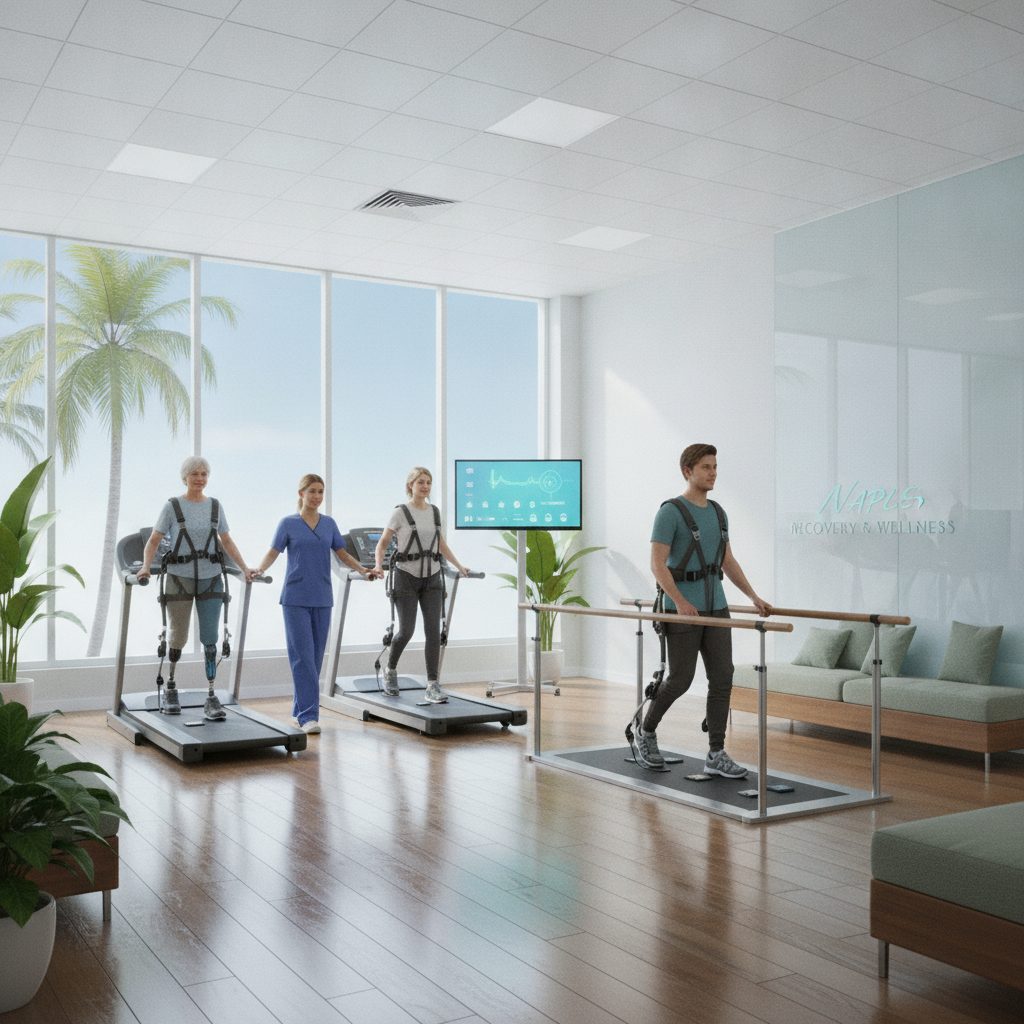
Walking feels automatic until it stops feeling that way. A hitch in your step after surgery, a heavy leg after a stroke, or a cautious shuffle after a fall can quietly shrink your world. You start avoiding the grocery store aisle that feels too long, the uneven driveway, the beach boardwalk you used to love. Gait training is a structured, hands-on way to rebuild the pattern of walking itself, not just the muscles that power it. If you have been searching for a physical therapist Naples FL residents trust to help with this, it helps to understand what the process actually involves before you book a visit.
This guide breaks gait training down in plain language. We will look at how a normal step works, what goes wrong, how a therapist evaluates you, and what a typical program looks like from the first visit to the day you walk out feeling like yourself again. You will also see how confidence plays a bigger role than most people expect, and why practicing in realistic situations matters as much as strength work. Whether you are recovering from a joint replacement, managing a neurological condition, or simply noticing that your stride has changed with age, the goal is the same: safer, smoother, more confident movement.
Think of this as a map. By the end, you will know what questions to ask, what to expect, and how to keep progress going at home.
What Gait Training Actually Is
Gait training is a form of physical therapy focused on the way you walk. Instead of treating one sore joint or one weak muscle in isolation, a therapist looks at the whole sequence: how your foot lands, how your knee and hip share the load, how your trunk stays balanced, and how your arms swing to keep you steady. Each of those pieces has to cooperate for walking to feel effortless.
The work can include walking on a treadmill with a harness for safety, stepping over low obstacles, practicing heel-to-toe patterns, using parallel bars, or progressing from a walker to a cane to independent walking. The therapist cues you in real time, sometimes with hands-on guidance, sometimes with simple verbal reminders like “lead with your heel” or “stand tall through the hips.”
Because the pattern is relearned through repetition, the nervous system plays a starring role. A skilled Physical therapist Naples FL patients rely on will blend strengthening, mobility work, and walking practice so each supports the other rather than treating them as separate tasks.
The Anatomy of a Healthy Step
To appreciate what gait training fixes, it helps to know what a healthy step looks like. Every stride has two broad phases. In the stance phase, your foot is on the ground, absorbing impact and then pushing you forward. In the swing phase, the leg lifts, travels forward, and prepares for the next landing. Roughly sixty percent of a typical stride is stance, which is why stability matters so much.
Within those phases, several things happen quickly. Your heel strikes the ground, the foot rolls toward the toes, and your ankle, knee, and hip each flex and extend at precisely the right moments. Meanwhile your pelvis rotates slightly, your opposite arm swings forward, and your core muscles keep your trunk from wobbling side to side.
When any one link weakens or stiffens, the body compensates. You might hike a hip, drag a toe, shorten the step on one side, or lean to keep weight off a painful joint. These workarounds feel helpful in the moment but often create new problems in the back, knees, and feet over time. Gait training works to restore the original, efficient pattern.
Signs Your Walking Pattern Has Changed
Many people do not realize their gait has shifted until someone points it out, or until a small stumble makes them stop and think. Early signs tend to be subtle. You may notice that one shoe wears out faster than the other, that you tire out sooner on familiar routes, or that you instinctively reach for walls and furniture in the house.
Other common signals include a shorter stride, a wider stance for extra stability, shuffling instead of lifting the feet, a limp that comes and goes, or a stiff arm that no longer swings. Some people describe a sense of “unsureness” on curbs, ramps, or soft sand. Others feel fine indoors but anxious in crowds, where a bump from a stranger could throw them off.
These changes can follow joint surgery, a stroke, a neurological condition, an old injury, or simply years of inactivity. They can also develop slowly as muscles weaken. If friends or family have commented on how you walk, or if you have started planning your day around avoiding stairs, it is worth having an evaluation sooner rather than later.
How a Therapist Evaluates Your Gait
A good evaluation starts with a conversation about your history, your goals, and the situations where walking feels hardest. From there, the therapist watches you move. You may be asked to walk down a hallway at your normal pace, then faster, then slower, while the therapist observes your foot strike, step length, trunk posture, and arm swing from several angles.
Hands-on testing follows. Strength checks look at the ankles, knees, hips, and core. Range of motion tests show whether stiff joints are limiting your stride. Balance tests, such as standing on one leg or walking heel to toe, reveal how well your body manages stability. Many clinics also use timed walking tests to establish a baseline you can beat later.
At Ideal Physical Therapy, this kind of assessment is typically used to build a plan around your actual limitations rather than a generic protocol. The result is a clear picture of what is driving the problem, whether that is weakness, pain, stiffness, poor coordination, or fear of falling.
What a Typical Gait Training Session Looks Like
Sessions usually begin with a warm-up that wakes up the muscles and joints: gentle ankle pumps, hip circles, or a few minutes on a stationary bike. The therapist then moves into targeted drills. These might include marching in place to groove a clean hip lift, side stepping with a resistance band, or practicing weight shifts so you learn to trust each leg again.
Walking practice comes next. You may walk between parallel bars at first, then on open floor with a walker or cane, and eventually without any device. Treadmill work lets the therapist control speed precisely and watch your pattern at a steady rhythm. Cues are specific: lengthen the step on the weaker side, land softly through the heel, keep your eyes up instead of staring at your feet.
Rest breaks are built in, and the intensity is adjusted constantly. You should feel challenged but never unsafe. Sessions often end with a short cool-down and a home practice assignment, so the work you do in the clinic carries over to your daily routine rather than disappearing between visits.
Strength, Balance, and Coordination Working Together
Walking well is rarely about a single weak muscle. It is about a team. The glutes drive you forward and keep the pelvis level. The quadriceps control the knee as you load the leg. The calves provide push-off power. The core steadies the trunk, and the muscles around the ankle make thousands of tiny corrections to keep you upright on uneven ground.
Gait training weaves these together. Strength exercises such as sit-to-stands, step-ups, and calf raises build the raw power. Balance drills like single-leg stands, tandem walking, and weight shifts on foam train the reflexes that catch you when you wobble. Coordination work, such as walking while turning your head or carrying an object, teaches the brain to manage walking alongside other tasks.
Some clinics also add modern recovery tools. For stubborn tissue pain that interferes with walking, options like Ideal Physical Therapy (2) may be discussed as part of a broader plan, always alongside active movement rather than as a replacement for it.
Who Benefits Most From Gait Training
The range of people who benefit is wider than most expect. After a hip or knee replacement, gait training helps you move from walker to independence safely while avoiding the limp that can linger for months. After a stroke, it retrains the brain and body to coordinate a weakened side. People with Parkinson’s disease often use it to work on stride length and the tendency to shuffle.
Older adults who feel unsteady, or who have had a close call with a fall, gain stability and confidence. Athletes returning from ankle sprains, stress injuries, or ligament repairs use it to rebuild a clean running and walking pattern before they ramp up activity. People with chronic back or hip pain sometimes discover that their pain is tied to how they walk, and correcting the pattern reduces strain.
Even someone with no diagnosis at all can benefit. If your steps have grown cautious, if you tire quickly, or if you simply want to stay active for decades to come, a short course of gait training can tune up a pattern that has drifted off course.
Common Walking Problems and How Therapists Address Them
Different problems call for different strategies. The table below shows a few frequent patterns and the typical approach used to correct them.
| Walking Problem | Common Cause | Typical Training Focus |
|---|---|---|
| Dragging a toe | Weak ankle lifters or nerve involvement | Ankle strengthening, high-step drills |
| Hip hiking or swinging a leg | Stiff knee or weak hip flexors | Hip mobility, marching, knee control |
| Short shuffling steps | Balance loss or neurological change | Big-step cueing, rhythm training |
| Leaning to one side | Pain avoidance or glute weakness | Weight shifting, glute strengthening |
Rebuilding Confidence Along With Strength
Confidence is not a soft extra in gait training. It is a core outcome. After a fall or a long recovery, many people develop a fear of moving that makes them tense, slow, and even less stable. That tension can create the very stumbles they are afraid of.
Therapists address this directly. They start with tasks you can succeed at, then raise the difficulty in small steps. Walking a longer hallway, turning corners, stepping off a curb, and navigating a crowded space are introduced gradually, each with safety measures in place. Each success becomes proof that your body can handle more than your worries suggested.
Tracking progress helps too. When you see your walking speed climb, your standing balance time increase, or your reliance on a cane fade, the numbers give you tangible reasons to trust your legs. Locally, residents often mention that the first walk to the mailbox without help feels like a milestone, and honestly, it is.
Practicing Real-Life Terrain in Naples
Clinic floors are smooth and predictable. Real life is not. Part of effective gait training is preparing you for the surfaces and situations you actually face. In a coastal community, that can mean soft sand, wet pavement after a summer downpour, uneven brick pavers, parking lot curbs, and long walks through busy shopping areas.
Therapists often recreate these challenges in controlled ways. Foam pads mimic soft ground. Ramps and stairs prepare you for building entrances. Obstacle courses with cones and low hurdles train you to adjust your steps quickly. Carrying a bag, pushing a cart, or walking while holding a conversation adds the distractions that make real-world walking harder than a clean hallway.
If your goal is walking the beach at sunset or keeping up with grandchildren at a park, say so. A good plan is built around the places you want to go, not just clinic benchmarks. Specific goals make the work more motivating and the results easier to measure.
Keeping Progress Going at Home
What you do between visits shapes how fast you improve. Short, consistent practice beats occasional long efforts. A therapist will usually give you a handful of exercises that fit into a busy day: sit-to-stand repetitions from a kitchen chair, heel raises while brushing your teeth, or a few minutes of tandem walking along a countertop for safety.
Walking itself becomes part of the program. You might be asked to take short, frequent walks at a comfortable pace, gradually lengthening them as your endurance builds. Supportive, closed-back shoes, a clear path free of loose rugs, and good lighting all make home practice safer.
Pay attention to how you feel afterward. Mild muscle fatigue is normal. Sharp pain, new swelling, or dizziness is not, and you should tell your therapist right away. It can also help to read about how recurring symptoms develop, such as in Why Your Sciatica Keeps Coming Back in Naples, FL Despite Temporary Relief, because lingering nerve or back issues can quietly alter how you walk.
When Pain Gets in the Way of Walking
Sometimes the biggest obstacle to a better gait is pain. A sore low back, a cranky hip, or a nerve that sends sharp sensations down the leg can all change how you move. When that happens, the body protects itself by altering the pattern, and those protective habits can outlast the pain that caused them.
Effective care tackles both sides. Hands-on techniques, targeted exercise, and movement retraining reduce the pain driver, while gait work resets the pattern so the old limp does not become permanent. Many people prefer approaches that avoid relying on medication, and resources like Drug-Free Back Pain Relief Options in Naples, FL outline ways active, hands-on care can ease symptoms so you can walk more freely.
If you have sudden weakness, numbness in the groin, loss of bladder control, or severe pain after a fall, seek urgent medical attention rather than waiting for a therapy appointment.
Your Next Steps
Walking is one of the most meaningful things your body does. It connects you to errands, friends, hobbies, and independence. When it starts to feel unreliable, the instinct is often to move less, which only weakens the system further. Gait training reverses that spiral by giving you a clear, supervised path back to smooth, confident steps.
Here is how to get started. First, notice the details of your own walking: where it feels hard, when you feel unsteady, and what you have started avoiding. Second, write down your goals in concrete terms, such as walking a full lap around the neighborhood, climbing stairs without the rail, or strolling the beach without worry. Third, schedule an evaluation with a qualified therapist who will watch you move, test your strength and balance, and build a plan around what they find.
Progress rarely happens overnight, but it does happen. Strength builds, balance sharpens, the pattern smooths out, and confidence follows. Keep practicing at home, stay honest about how you feel, and celebrate the small wins along the way, because they add up quickly. If your steps have changed or your confidence has dipped, you do not have to accept it as the new normal. With the right guidance, most people can move better, move more, and get back to the places that matter to them. This community is full of beautiful places to walk, and you deserve to enjoy them comfortably.