
The most common pickleball injuries are sprains and strains, fractures from falls, and overuse pain in the elbow, shoulder and lower leg. Most happen when a player slips, trips or lunges, so better footwork, a real warm-up and strength and balance work can lower the risk. Pain that lingers after a week or two is worth having checked.
Pickleball is everywhere in Naples and on Marco Island, from community courts to private clubs, and plenty of players pick it up in their 60s and 70s. That’s great for staying active. It also means injuries that used to be rare on the court are now a regular part of physical therapy in Southwest Florida. Here’s what tends to go wrong, how to protect yourself, and when to get help.
Key Takeaways
- Strains, sprains and fractures are the injuries most often seen in emergency rooms after pickleball.
- Slips, trips and falls cause most senior pickleball injuries, and wrist fractures are a particular risk for women.
- Elbow and shoulder pain usually build slowly from overuse, grip and paddle habits.
- A warm-up, court shoes, balance training and sensible playing time are the basics of prevention.
What Are the Most Common Pickleball Injuries?
The most common pickleball injuries treated in emergency rooms are strains and sprains, followed closely by fractures. A study of national emergency room data from 2001 to 2017, published in the Journal of Emergency Medicine, found strains or sprains in 28.7% of cases and fractures in 27.7%. Patients 50 or older made up 90.9% of those injured.
Injuries in that study hit the legs a bit more often than the arms. In day-to-day physical therapy, the problems players bring in usually fall into a few groups:
- Ankle sprains from quick side steps or rolling over a ball
- Calf and Achilles strains from sudden pushes toward the kitchen line
- Knee pain from repeated lunging, pivoting and squatting low for dinks
- Wrist injuries, including fractures, from catching yourself in a fall
- Elbow tendon pain on the outside or inside of the elbow
- Shoulder irritation from overheads and repeated reaching
- Low back strain from bending and twisting during long games
Why Do So Many Pickleball Injuries Come From Falls?
Pickleball looks gentle, but it’s full of short bursts, quick stops and backpedaling. A 2021 study in Injury Epidemiology looked at players 60 and older and found that slips, trips, falls and dives caused 63.3% of pickleball injuries.
The same study found that senior women were more than three and a half times as likely as men to suffer a fracture, and nine times as likely to break a wrist. Senior men were more likely to have a strain or sprain. Backpedaling for a lob is a classic setup for a backward fall, which is why many coaches teach players to turn and move sideways instead.
Is Pickleball Elbow the Same as Tennis Elbow?
Mostly, yes. “Pickleball elbow” is a nickname for pain on the outside of the elbow, which doctors call lateral epicondylitis. The American Academy of Orthopaedic Surgeons describes it as an overuse problem in the forearm tendons that attach on the outside of the elbow, often linked to racquet sports, technique and equipment.
It usually starts mild and builds over weeks. Common signs include pain or burning on the outer elbow, a weaker grip, and pain when you hold the paddle, turn a doorknob or shake hands. AAOS notes that treatment often starts with rest from the aggravating activity and that physical or occupational therapy exercises to strengthen the forearm are a common part of care, along with options like a forearm brace and an equipment check.
How Can You Prevent Pickleball Injuries in Naples?
You can lower your risk with a few habits that take only minutes per session:
- Warm up before you play. Five to ten minutes of easy movement, side shuffles, arm circles and light dinking prepares muscles and tendons.
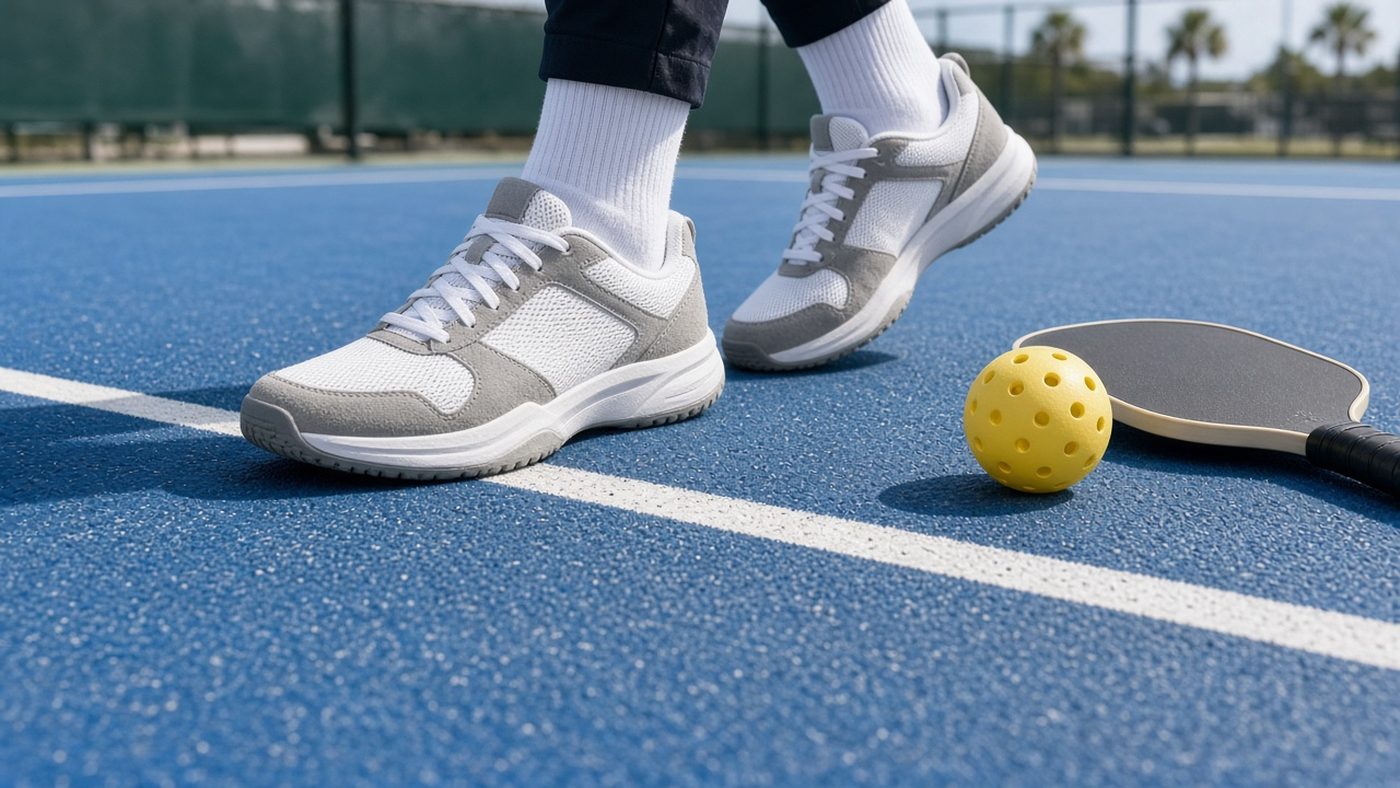
- Wear court shoes. Running shoes are built for forward motion. Court shoes support side-to-side movement and may help with ankle stability.
- Don’t backpedal for lobs. Turn your body and shuffle, or let your partner take it.
- Build strength and balance off the court. Calf raises, step-ups, hip and core work and single-leg balance drills all carry over to the court.
- Increase playing time gradually. Going from two games a week to daily open play during season is a common trigger for elbow and Achilles trouble.
- Plan for Southwest Florida heat. Play earlier or later in the day, drink water between games, and stop if you feel dizzy or unwell.
- Check your paddle and grip. A grip that’s too small or too large makes forearm muscles work harder.
When Should You See a Doctor Instead of Waiting It Out?
Some symptoms need prompt medical care rather than rest at home. Call 911 for chest pain, trouble breathing, fainting or confusion on the court. The Injury Epidemiology study found that heart and other non-injury medical events made up 11.1% of senior pickleball cases in emergency rooms, so these aren’t rare.
Go to urgent care or the emergency room if you:
- Can’t put weight on your leg, or a joint looks out of shape
- Fell on your hand and have wrist swelling, deformity, or numb or pale fingers
- Felt a sudden pop at the back of your heel and can’t push off
- Hit your head, and even more so if you take blood thinners
For pain that isn’t an emergency but hasn’t eased after a week or two, or keeps coming back each time you play, it’s a good time to get evaluated.
How Does Physical Therapy Help After a Pickleball Injury?
Physical therapy for a pickleball injury usually starts with an evaluation of the painful area, plus how you move, balance and load the joint. From there, a plan may include manual therapy, targeted strengthening, mobility work and a gradual return to drills and games. Results vary, and the plan changes as you progress.
In Florida, you can usually start with a licensed physical therapist without a doctor’s referral. State law, section 486.021 of the Florida Statutes, does require a practitioner of record to review the plan if care for a condition no doctor has assessed goes past 30 days. Your insurance plan may have its own referral rules.
How Ideal Physical Therapy & Fitness Can Help
Our team works with active adults, golfers and pickleball players across Naples and Marco Island. We provide physical therapy for orthopedic and sports injuries, along with balance and fall-prevention work that can help you feel steadier on the court.
Frequently Asked Questions
How long does it take to recover from a pickleball injury?
It depends on the injury and how long you’ve had it. A mild strain may settle in a few weeks, while a fracture or long-standing tendon problem takes longer. Your therapist can give you a timeline after your evaluation.
Can I keep playing pickleball with elbow pain?
Playing through worsening pain usually makes tendon problems last longer. Cutting back on playing time, checking your grip and paddle, and starting forearm strengthening may help. Ask a provider before returning to full play.
Should I ice or heat a pickleball injury?
Many people use ice for a fresh sprain or strain in the first couple of days and gentle heat later for stiffness. If swelling is severe or you can’t bear weight, get checked instead of treating it at home.
Do I need court shoes for pickleball?
Court shoes are designed for the side-to-side movement pickleball requires and usually have flatter, grippier soles than running shoes. They’re one of the simplest changes you can make to protect your ankles.
Is pickleball safe after a knee or hip replacement?
Some people return to pickleball after joint replacement, but it depends on your surgeon’s guidance and how your recovery is going. Ask your surgeon first, then a physical therapist can help you rebuild strength and balance for the court.
If a pickleball injury is keeping you off the court, call Ideal Physical Therapy & Fitness at (239) 272-3226 or contact us online to schedule an evaluation in Naples.
This article is for general information and is not medical advice. Talk with a licensed provider about your situation.