
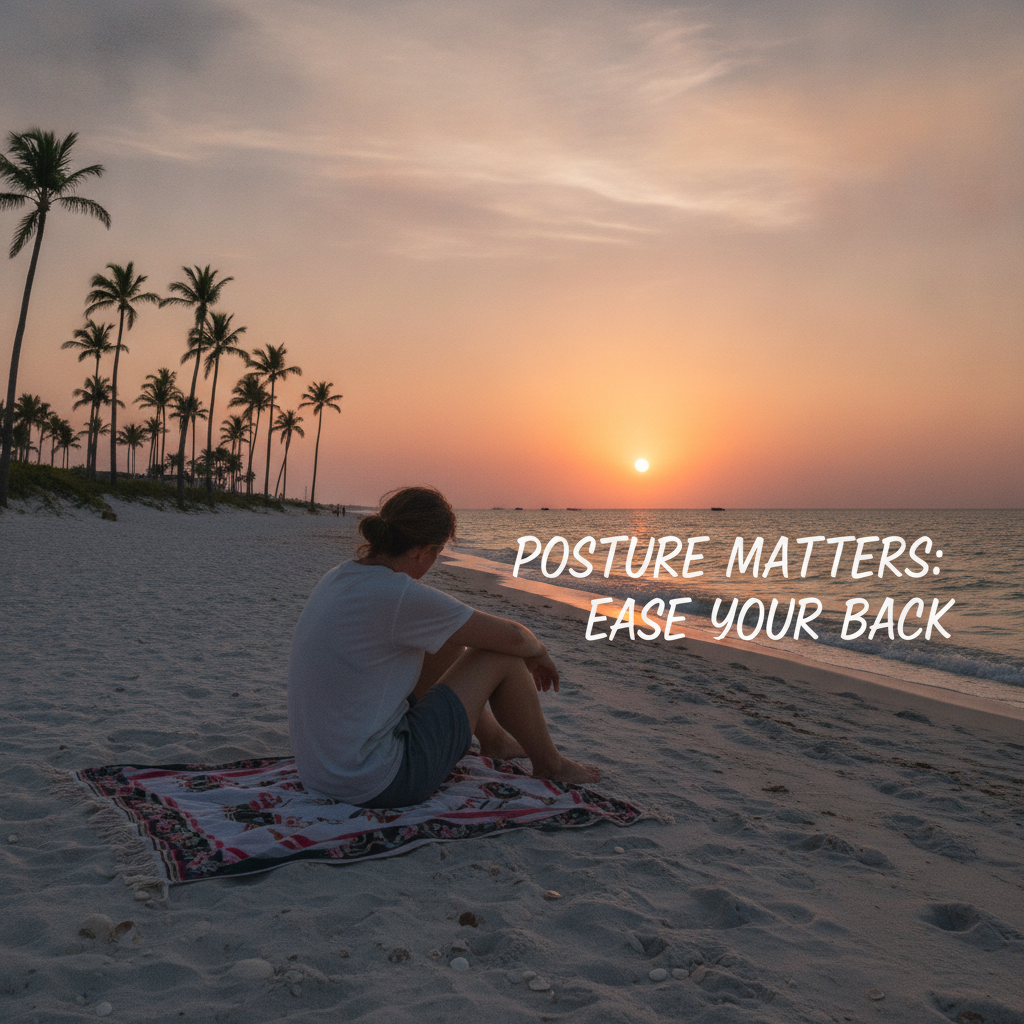
Most of us do not think about posture until something starts to ache. You sit down at a desk at eight in the morning, lean toward a screen, and by mid-afternoon your lower back feels like a clenched fist. Sound familiar? For many people, that dull, nagging ache is not a mystery injury at all. It is the cumulative result of thousands of small positioning choices made every day, from how you hold your phone to how you slouch on the couch after dinner.
If you have been searching for back pain treatment Naples FL residents trust, understanding the role posture plays is a smart first step. Posture is not about standing like a soldier. It is about how well your joints, muscles, and nerves share the load of gravity throughout the day. When that load is shared poorly, certain tissues get overworked while others go quiet, and pain is often the signal that the balance has tipped.
This guide is written for small business owners hunched over invoices, developers who code for hours, retirees who love long afternoons on the lanai, and anyone in between. We will walk through how posture and back pain are connected, which habits do the most damage, what you can fix on your own, and when it makes sense to bring in a professional. No scare tactics, just practical information you can use today.
How Posture and Back Pain Are Actually Connected
Your spine is a stack of bones separated by cushioning discs and held upright by layers of muscle and connective tissue. In a well-aligned position, the natural curves of your neck, mid-back, and lower back absorb stress like a spring. When you slump or lean for long stretches, those curves flatten or exaggerate, and the stress lands on structures that were never designed to carry it alone.
Over time, sustained poor positioning can irritate joints, strain ligaments, and fatigue the stabilizing muscles along the spine. The tricky part is that damage rarely happens in one dramatic moment. It builds quietly, which is why many people say their pain showed up out of nowhere. A thoughtful program of spinal pain relief therapy typically begins by identifying these slow-burn patterns rather than chasing the symptom alone.
It is also worth saying that posture is not the only cause of back pain, and no single position is universally perfect. The best posture is usually the next one, meaning your body is built to move, and variety matters more than rigid correctness.
Everyday Habits That Quietly Strain Your Spine
Some of the biggest offenders are surprisingly ordinary. Reading a phone with your chin tucked down adds load through the neck and upper back. Sitting on the edge of a chair without back support forces your lower back muscles to work nonstop. Even sleeping on a sagging mattress or stacking too many pillows can leave you waking up stiff.
Standing habits count too. Many people park their weight on one hip while waiting in line, or lock their knees and tilt the pelvis forward while chatting at a counter. Carrying a heavy bag on one shoulder, wearing unsupportive footwear, and slouching into a soft sofa for hours all nudge the body into patterns that repeat day after day.
None of these habits looks dangerous on its own. The issue is repetition. A position held for ten minutes is harmless, but the same position held for ten hours across a workday tells your tissues to adapt in ways that can become uncomfortable. If you are already dealing with pain, a targeted plan for Back pain treatment Naples FL can help you sort out which habits matter most for your body.
The Desk Worker’s Dilemma for Owners and Developers
If you run a small business, you probably wear ten hats and sit through most of them. If you write code, your focus can be so deep that hours vanish without a single position change. Both groups share a risk: intense concentration masks the early warning signs your body sends, so you only notice the ache when you finally stand up.
Common desk problems include a monitor set too low, a keyboard too far away, a chair without lumbar support, and feet that dangle or tuck awkwardly beneath you. Laptops are especially tricky because the screen and keyboard are attached, which means you can fix the neck position or the arm position but not both without accessories.
Small fixes go a long way. Raise your screen so the top line sits near eye level, keep your elbows close to a ninety-degree bend, and let your feet rest flat. Set a quiet timer every thirty to forty-five minutes to stand, roll your shoulders, and walk to refill your water. These micro-breaks cost almost no productivity and often improve focus.
Signs Your Posture May Be Behind the Pain
How can you tell whether posture is a likely culprit? Look at the pattern. Pain that builds gradually during sitting or standing, eases when you change position, and feels better in the morning than at day’s end often points toward a mechanical, posture-related cause. Stiffness after a long drive or a marathon work session is another clue.
You might also notice tension between the shoulder blades, a tight neck, or hips that feel locked after sitting. Some people discover that their lower back aches most when they stand still, while walking feels fine. Others feel relief when they lean forward on a cart or counter, which can hint at how spinal positioning influences symptoms.
Related patterns can show up farther down the leg, especially when the hips are involved. For a closer look at that connection, this resource on Sciatica and Hip Tightness in Naples, FL: The Mobility Link Many People Miss explains how stiff hips can change the way the lower back moves and feels.
When It Is Not Just Posture: Red Flags to Respect
Posture gets a lot of blame, and sometimes that blame is deserved. But it is important to recognize situations where back pain needs prompt medical attention rather than a new chair. Seek evaluation quickly if pain follows a fall or accident, comes with fever or unexplained weight loss, or wakes you from sleep no matter how you position yourself.
Numbness in the groin or saddle area, new weakness in a leg, trouble controlling bladder or bowel function, or pain that keeps getting worse despite rest are all reasons to be seen right away. These signs can indicate problems that go beyond muscle strain and deserve a professional look.
Even without red flags, pain that lingers beyond a couple of weeks, keeps returning, or limits your daily activities is worth discussing with a licensed provider. Waiting and hoping is understandable, but early guidance often prevents a small problem from becoming a persistent one. A clear assessment can tell you whether posture is the main driver or just one piece of a larger puzzle.
Posture Habits Compared: What Helps and What Hurts
Sometimes a side-by-side view makes the differences easier to see. The table below compares common daily habits with more supportive alternatives. Treat it as a starting point rather than a rulebook, since every body responds a little differently.
| Daily Situation | Common Strain Pattern | Supportive Alternative |
|---|---|---|
| Working at a laptop | Head forward, shoulders rounded | Raise screen, add external keyboard |
| Long drives | Seat too reclined, no lumbar support | Upright seat, small cushion behind low back |
| Standing in place | Weight on one hip, locked knees | Shift weight often, soften knees |
| Phone use | Chin tucked down for long periods | Lift phone toward eye level |
| Sleeping | Too many pillows, sagging mattress | One supportive pillow, firmer surface |
Simple Movement Resets You Can Try Today
You do not need a gym or special equipment to start loosening a posture-weary back. A few gentle resets, repeated through the day, can help your tissues stay adaptable. Always move within a comfortable range and stop if anything sharpens your pain.
- Seated pelvic tilts: Gently rock your pelvis forward and back ten times to wake up the lower spine.
- Shoulder blade squeezes: Draw your shoulder blades together and down, hold for three seconds, and release.
- Standing hip openers: Take a gentle lunge stance for twenty seconds per side to ease hip flexors.
- Chin glides: Slide your head straight back, as if making a double chin, to counter forward head carriage.
- Short walks: Two minutes of walking every hour can reset stiff joints better than any single stretch.
Think of these as maintenance rather than a cure. They keep your body from settling into one rigid shape, which is often half the battle.
Why Strength and Endurance Matter More Than Sitting Tall
Many people try to fix posture by forcing themselves to sit up straight, then give up after ten minutes because it feels exhausting. That fatigue is a clue. Good alignment is not a pose you hold through willpower, it is a position your muscles can maintain comfortably because they are strong and conditioned enough to do the job.
The muscles that matter most include the deep core stabilizers, the glutes, the muscles between your shoulder blades, and the back of the legs. When these groups are weak or underused, the body leans on passive structures like ligaments and joint surfaces, which is how strain creeps in.
Building endurance in these areas takes patience and progression. Bridges, bird-dog holds, rows with light resistance, and supported squats are common starting points. The goal is not heavy lifting but steady, repeatable control. A good physical therapist tailors the dose to your current ability, so you build capacity without flaring symptoms or guessing at the right exercises.
Hands-On Care and Modern Options Locally
When self-care is not enough, professional support can speed things up and add safety. In Naples, many people turn to clinics that combine manual therapy, targeted exercise, and education so that relief lasts beyond the appointment. Manual techniques can calm irritated tissues and improve joint motion, which makes corrective exercise easier to perform.
Some clinics also offer newer, non-invasive technologies as part of a broader plan. For example, Ideal Physical Therapy provides options such as SoftWave therapy alongside traditional rehabilitation, giving patients more than one path toward comfort. Whether a particular approach suits you depends on your history, goals, and examination findings.
The most useful clinics tend to share a few traits: they listen carefully, explain what they find in plain language, and set measurable goals with you. If a provider cannot tell you what the plan is trying to accomplish, keep asking questions until it makes sense.
When Posture Strain Spreads Down the Leg
Sometimes the story does not stop at the lower back. Sustained slouching, tight hips, and weak stabilizers can contribute to irritation that travels into the buttock or down the leg, producing that familiar zing, tingle, or burn people often call sciatica. While not every case is caused by posture, daily positioning can certainly aggravate it.
Active adults often worry that leg symptoms mean they must stop everything they enjoy. In reality, many people can keep moving with smart modifications, graded exercise, and guidance on which positions to favor. For a fuller picture of staying active through these episodes, read about Sciatica Pain Relief in Naples, FL for Active Adults Who Don’t Want to Stop Moving.
If you notice leg symptoms alongside your posture-related back pain, mention them early in any evaluation. Describing where it travels, what triggers it, and what eases it gives a clinician valuable clues for shaping your plan.
Building a Posture-Friendly Routine That Lasts
Lasting change comes from small, repeatable habits rather than dramatic overhauls. Start by choosing just two or three adjustments, such as raising your monitor and setting a movement timer, and give them a couple of weeks before adding more. Habits stick when they are easy and attached to cues you already have.
Anchor new behaviors to existing routines. Do shoulder blade squeezes while your coffee brews, practice a standing hip opener after each phone call, and take a short walk after lunch. Track how you feel at the end of the day rather than aiming for perfect form, since comfort is the real measure of progress.
Environment matters as well. A supportive chair, a monitor riser, and good footwear are modest investments that pay off daily. Rotate your workspace between sitting and standing if possible, and avoid staying in any single position for too long. Variety is the quiet hero of a healthy spine, and your future self will thank you for the effort.
Your Next Steps
So, can poor posture be causing your back pain? Very often, yes, at least in part. Sustained slouching, awkward desk setups, long periods without movement, and weak supporting muscles can combine to overload your spine and leave you aching at the end of the day. The encouraging news is that these factors are changeable, and most people can make meaningful progress with practical adjustments and consistent effort.
Begin with what you control today. Adjust your workstation, build short movement breaks into your schedule, and add a few gentle exercises that strengthen the muscles your body relies on. Pay attention to patterns in your symptoms, because they tell you a great deal about what your back needs. Remember that posture is only one piece of the picture, and pain that is severe, worsening, or paired with red-flag symptoms deserves prompt medical attention.
If you have tried the basics and still feel stuck, a hands-on evaluation from a licensed physical therapist can bring clarity. A good clinician will look at how you move, sit, and stand, then build a plan that fits your life instead of a generic handout. Whether you are a business owner juggling a packed schedule, a developer facing long hours at the keyboard, or simply someone who wants to enjoy daily life without wincing, relief is within reach. Take the first step this week, and give your back the support it has been asking for.