
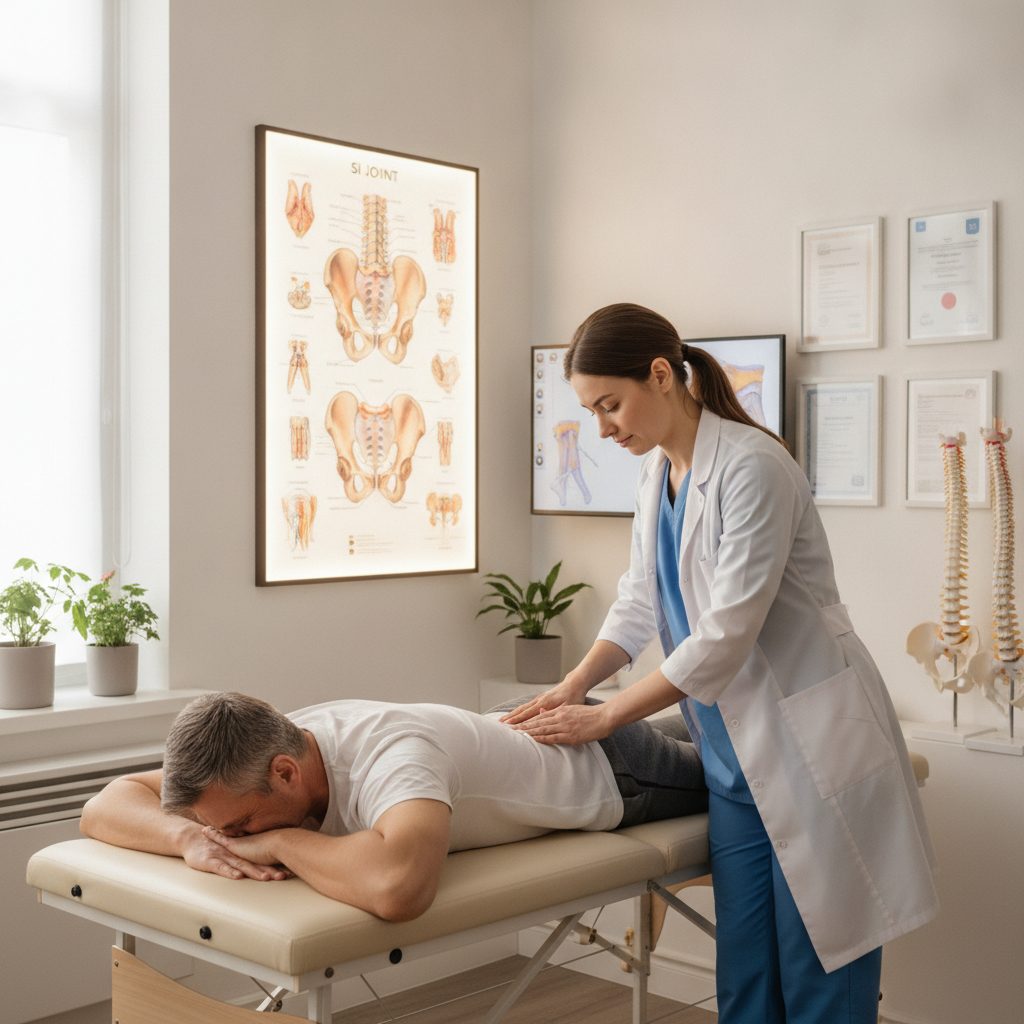
You have been dealing with an ache low on one side of your back for weeks. You stretch, you shift in your chair, you try a heating pad, and yet the pain keeps coming back. Many people assume this kind of discomfort is a muscle strain or a pinched nerve in the spine, but a surprising number of cases trace back to a small, hard-working joint where the spine meets the pelvis: the sacroiliac joint, or SI joint. Because SI joint trouble imitates so many other conditions, it is often misread for months. If you are searching for back pain treatment Naples FL residents can trust, the first step is understanding what SI joint pain actually feels like and how it differs from other sources of pain. This guide walks through the telltale signs, the movements that tend to provoke it, the look-alikes worth ruling out, and practical steps you can take before you seek professional help. Whether you spend your days at a desk running a business, writing code, or chasing a busy retirement schedule, knowing the pattern of your pain can save you time, frustration, and unnecessary guesswork. Let us break it down in plain language so you can walk into an appointment informed and confident.
What the SI Joint Actually Does
The sacroiliac joints sit on either side of the base of your spine, connecting the sacrum (the triangular bone at the bottom of the spine) to the large pelvic bones. There are two of them, one left and one right, and their main job is shock absorption. Every time you walk, climb stairs, or step off a curb, forces travel from your legs up through the pelvis and into the trunk. The SI joints cushion and distribute that load. They do not move much, only a few degrees, but that small amount of motion matters. When the joint becomes irritated, inflamed, or moves unevenly, the pain can be sharp and stubborn. Strong ligaments hold the joint together, and surrounding muscles from the glutes, hips, and core help stabilize it. When those supporting structures are weak or unbalanced, the joint takes extra stress. That is why SI trouble often shows up in people who have recently changed activity levels, sat for long stretches, or have uneven strength from one side of the body to the other. If you have been battling lower back pain that never quite fits the usual patterns, this small joint deserves a closer look.
Where the Pain Tends to Show Up
Location is one of the most useful clues. SI joint pain usually sits below the beltline, in the small dimple area on one side of the low back, just beside the base of the spine. People often describe it as a spot they could cover with one finger. Pain may stay right there, or it can radiate into the buttock, the back of the upper thigh, and sometimes the groin. It rarely travels below the knee, which helps separate it from classic nerve irritation. It is also commonly one-sided, although it can occur on both sides. Some people feel a deep, dull ache, while others feel a sharp, stabbing sensation when they move a certain way. Stiffness and a sense of the low back or pelvis feeling “unstable” or “stuck” are common complaints. Pain that is higher up, near the middle of the back or between the shoulder blades, is much less likely to come from the SI joint. Mapping the pain honestly helps. Try pointing to the exact spot that hurts most. If your finger lands on the area just beside the tailbone and to one side, that is a point in favor of the SI joint as a contributor.
Movements That Commonly Trigger SI Joint Pain
SI joint pain tends to flare with specific, repeatable movements, and noticing those patterns can be revealing. Standing up from a chair after sitting for a while is a classic trigger. So is rolling over in bed, getting in and out of a car, or putting weight on one leg at a time, such as climbing stairs or pulling on a pair of pants while standing. Standing for long periods on one leg more than the other, or sitting with one leg crossed, can also stir things up. Many people notice that the pain eases when they walk for a few minutes, only to return when they stop. Others feel it most when taking longer strides or stepping up onto a high surface. Compare this with a typical disc or muscle problem, where bending forward often makes things worse. With the SI joint, forward bending may be tolerable while single-leg tasks and transitions hurt more. Keep a simple log for a week. Note the time of day, the activity, and how the pain felt. That record becomes valuable information when a clinician evaluates you, and it may reveal patterns you would otherwise overlook.
SI Joint Pain Versus Sciatica
One of the biggest sources of confusion is the overlap between SI joint pain and sciatica. Both can send discomfort into the buttock and the back of the leg, so people often assume they have a pinched sciatic nerve when the real culprit is the joint. The key difference is how far the symptoms travel and what they feel like. True sciatica tends to follow a line down the leg, often past the knee and into the calf or foot, and may come with tingling, numbness, burning, or weakness. SI joint referral pain usually stays above the knee and feels more like a deep ache than an electric zing. Coughing or sneezing can aggravate nerve-driven pain, while the SI joint is more sensitive to loading and positional changes. Of course, it is possible to have both problems at once, which makes self-diagnosis tricky. If you notice numbness, tingling, or leg weakness, it is worth learning more about nerve-related causes, and you can click here to read about how those symptoms are evaluated and managed in a clinical setting.
Simple Clues You Can Check at Home
While only a trained professional can confirm the source of your pain, a few at-home observations can help you describe your situation accurately. First, notice whether pain is reproduced when you stand on the painful leg and lift the other knee, as if marching in place. Second, see whether lying on the painful side at night is uncomfortable, or whether turning over wakes you. Third, pay attention to whether a firm press on the small area beside the base of your spine is tender compared with the opposite side. Fourth, observe whether you feel a catching or locking sensation when you shift weight. None of these is a definitive test, and you should never push into sharp pain just to prove a point. Think of them as clues, not conclusions. A clinician will typically use a cluster of provocation tests, because no single test is reliable alone. They combine several maneuvers that stress the joint in different directions and look for a consistent pattern of pain reproduction. If your home observations point repeatedly toward the same spot, mention that during your evaluation.
Common Causes and Risk Factors
SI joint problems do not usually appear out of nowhere. Certain situations make the joint more vulnerable. Pregnancy and the months afterward are well-known contributors because hormones loosen ligaments and the pelvis shifts to accommodate a growing baby. A fall onto the buttocks, a car accident, or a hard misstep off a curb can irritate the joint suddenly. Repetitive stress matters too, including running, golf, and other sports that load one side more than the other. Differences in leg length, a history of lumbar spine surgery or fusion, and arthritis can all increase strain on the joint. Even everyday habits count. Sitting for long stretches with weight shifted to one side, or carrying a heavy bag on the same shoulder, can create imbalances over time. If your habits include long hours at a desk, it may be worth reading Can Poor Posture Be Causing Your Back Pain in Naples, FL? to see how everyday positions can quietly load the pelvis and low back. Recognizing your personal risk factors helps you and your therapist pinpoint what to change.
Other Conditions That Mimic SI Joint Trouble
Because the pelvis, hips, and spine are so closely connected, several conditions can masquerade as SI joint pain. Lumbar facet joint irritation can cause one-sided low back pain that refers into the buttock. A herniated disc can pinch a nerve and send pain down the leg. Hip joint problems, including arthritis or labral irritation, may produce groin and buttock pain that feels similar. Muscle problems such as piriformis tightness or gluteal trigger points can create deep buttock ache that mimics joint pain. Less commonly, inflammatory conditions of the spine can cause morning stiffness and pain that improves with movement, and that pattern deserves medical attention. The table below offers a quick comparison to help you see how the patterns differ, though it is not a substitute for a proper evaluation.
Quick Comparison of Common Look-Alikes
| Condition | Typical Pain Location | Common Trigger | Leg Symptoms |
|---|---|---|---|
| SI joint irritation | One side of low back, buttock | Standing from sitting, single-leg loading | Ache above the knee, rarely numbness |
| Disc or nerve irritation | Central low back, down the leg | Bending, coughing, sneezing | Tingling, numbness, below the knee |
| Facet joint pain | Low back, may refer to buttock | Leaning back, twisting | Usually stays above the knee |
| Hip joint problem | Groin, front of hip, buttock | Deep hip bending, pivoting | Thigh ache, sometimes limping |
| Gluteal or piriformis tightness | Deep in the buttock | Prolonged sitting, hip rotation | Occasional referred ache |
What a Professional Evaluation Looks Like
When you visit a physical therapist about suspected SI joint pain, the process usually begins with a conversation. Expect questions about when the pain started, what makes it better or worse, your work and activity habits, and any past injuries or pregnancies. Next comes a movement assessment, where the clinician watches how you stand, walk, and transition between positions. They may check pelvic alignment, hip mobility, and the strength of your glutes and core. A cluster of provocation tests then stresses the joint in various ways to see whether familiar pain is reproduced. They will also screen the lumbar spine and hips to rule out look-alikes, and may test for nerve involvement. If anything suggests a more serious problem, such as fever, unexplained weight loss, loss of bladder or bowel control, or progressive weakness, you will be directed to a physician right away. Imaging is not always necessary, since X-rays and MRIs often cannot show SI joint irritation clearly. A skilled hands-on assessment frequently provides the most useful information, and it sets the stage for a plan tailored to your body.
How Treatment Typically Works
Care for SI joint pain usually focuses on calming irritation first, then rebuilding stability so the problem does not return. Early on, a therapist may use gentle manual techniques to improve joint mobility and reduce muscle guarding, along with positioning strategies that take pressure off the area. Many clinics also offer modern options such as Ideal Physical Therapy programs that incorporate non-invasive technology alongside hands-on care to support tissue recovery. As pain settles, the emphasis shifts to targeted strengthening of the glutes, deep abdominal muscles, and hip stabilizers, which act like a natural brace for the pelvis. You will also learn movement strategies for daily tasks, such as how to stand up, climb stairs, and sleep comfortably. Progress is typically gradual. Most people notice that tasks they once avoided become easier before the pain disappears completely. Consistency with a home program matters a great deal, because the joint depends on balanced strength to stay quiet. If symptoms persist despite conservative care, your clinician can coordinate with a physician about other options, keeping the plan collaborative and safe.
Smart Daily Habits to Protect the Joint
While you work toward recovery, small daily adjustments can reduce flare-ups. Try to distribute your weight evenly when standing instead of resting on one hip, and avoid crossing your legs for long periods. When sitting, keep both feet on the floor and change positions regularly, since stillness is often harder on the joint than gentle movement. Place a small pillow between your knees when sleeping on your side, or under your knees when lying on your back, to keep the pelvis neutral. Take shorter steps when the joint is irritated, and avoid deep lunges or sudden twisting under load. Carry bags evenly on both sides or use a backpack rather than a single shoulder strap. For active adults who want to stay moving, resources like Back Pain Relief for Active Adults in Naples, FL can help you think through how to remain active without aggravating symptoms. Warm-ups before exercise, gradual increases in training load, and regular walking breaks during the workday all contribute to a more resilient pelvis over the long run.
When to Stop Guessing and Get Help
Plenty of people wait too long because they assume the pain will fade on its own or that rest alone will fix it. A reasonable rule of thumb is to seek an evaluation if your pain lasts more than a couple of weeks, keeps returning, limits your work or exercise, or disrupts your sleep. Do not wait if you notice worsening leg weakness, numbness in the groin or inner thighs, changes in bladder or bowel control, fever alongside back pain, or pain following a significant fall or accident. Those signs call for urgent medical attention. For ordinary, persistent discomfort, working with a local clinic that understands the connection between the spine, pelvis, and hips can make the path to recovery much shorter. Residents of Naples have access to hands-on, one-on-one care that looks at the whole movement picture rather than chasing symptoms. Getting an accurate answer early helps you avoid months of trial and error, and it gives you a clear plan you can actually follow with confidence.
Your Next Steps
SI joint pain is easy to overlook because it borrows the symptoms of so many other conditions. The main clues are pain concentrated low on one side of the back, often spreading into the buttock or upper thigh, flaring with transitions like standing up or shifting weight onto one leg, and rarely traveling below the knee. Understanding those patterns, keeping a simple symptom log, and noticing which movements help or hurt gives you a head start before any appointment. Just as important, remember that several look-alike conditions, from disc problems to hip issues, can feel remarkably similar, which is why a thorough hands-on evaluation matters more than a guess from a search engine. The good news is that most SI joint trouble responds well to a combination of gentle manual care, targeted strengthening, and smarter daily habits. You do not need to accept a nagging ache as part of life, whether you are managing a business, working long hours at a keyboard, or simply trying to enjoy your weekends. Pay attention to your body, make the small adjustments described above, and reach out to a qualified physical therapist if the pain lingers. A clear diagnosis and a personalized plan can help you move comfortably again.